A Player’s Guide to Rime of the Frostmaiden
Survival. Isolation. Paranoia.
Ten-Towns is dying.
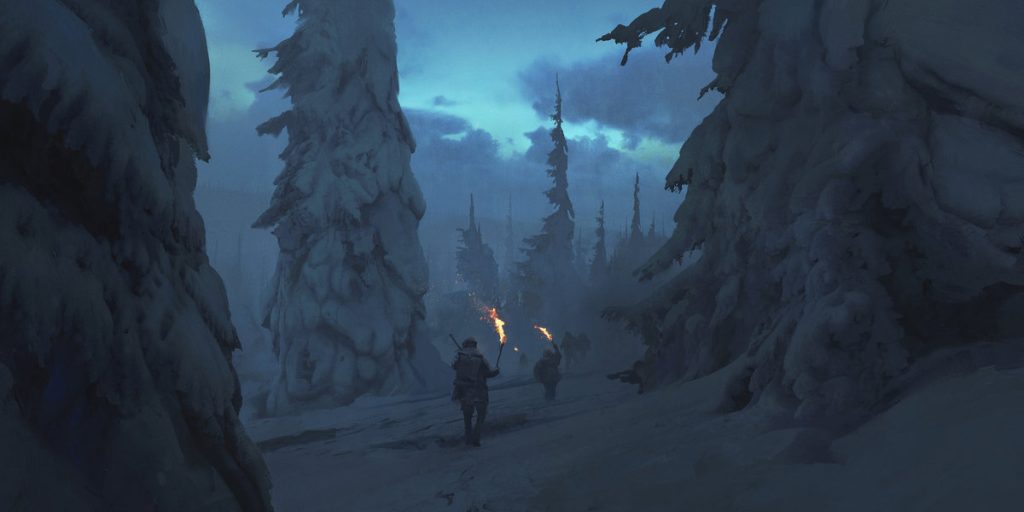
The sun no longer rises over the Spine of the World. The winds scream across the tundra like starving predators, clawing through layers of fur and leather as if you wore nothing at all. Fires sputter. Hope withers. People whisper that something ancient moves beneath the ice… Something hungry, patient, and wearing familiar faces.
In this campaign, you will not simply explore Icewind Dale.
You will endure it.
Heavily inspired by John Carpenter’s The Thing, this version of Rime of the Frostmaiden embraces survival horror:
- Isolated settlements, strained by fear and scarcity
- Harsh conditions that can kill as surely as any monster
- A creeping, shape-shifting threat hiding in plain sight
The Dale is cold, dark, and secretive; the people even more so.
What Kind of Game This Is
This campaign is a darker, grittier, and heavily homebrewed version of the published adventure. It blends:
- Exploration
- Survival horror
- Mystery and paranoia
- Faction intrigue
- Player-driven storytelling
Your choices matter. The Dale reacts. And the consequences of your actions will ripple far beyond the snowdrifts.
Expect themes of isolation, mistrust, sacrifice, and the fear of the unknown.
Survival Horror: A Clarification
This campaign features expanded rules for travel, encumbrance, and resource management, but these are NOT designed to punish you.
You will not be asked to:
- micro-manage rations & supplies,
- lose long rests because you forgot a torch,
- or spend hours trying to correctly resolve travel pathing.
Instead, these mechanics exist to create tension, exposure, and story opportunities.
A Forage action, for example, isn’t busywork… It’s a signal to me that your character is out alone in the snow, vulnerable… and ripe for a chilling encounter or unexpected horror.
These systems are narrative levers, not shackles.
Factions of Faerûn in the Far North
Though Icewind Dale is remote, the darkness creeping across it has drawn the attention of the major factions of Faerûn. Working with one can grant you allies, resources, and unique story hooks, but also political complications.
The Harpers – Subtle Protectors of the People
A clandestine network of spies, informants, and idealists who oppose tyranny from the shadows. In the Dale, they investigate strange magic, missing travelers, and rumors of unnatural phenomena.
The Emerald Enclave – Wardens of the Wild
Druids, rangers, and naturalists who preserve the balance of nature. They suspect the eternal winter is more than divine whim and seek to understand the corruption spreading through the land.
The Lords’ Alliance – Diplomats and Power Brokers
Agents of powerful city-states who enforce order and stability. In Ten-Towns, they attempt to maintain unity, oversee trade, and navigate rising tensions between settlements.
The Order of the Gauntlet – Holy Warriors Against Darkness
Paladins and clerics dedicated to justice and purity. They see the Dale as a domain of evil forces and are committed to rooting out cults, abominations, and other threats, no matter the cost.
The Zhentarim – The Black Network
Mercenaries, merchants, and criminal masterminds. Some Zhentarim cells are lawful traders; others are ruthless opportunists. In Icewind Dale, scarcity is profit, and they intend to profit greatly.
Every faction also comes with its own secret side-objectives. Hidden missions that, if completed quietly, will reward loyal members.
Player Secrets: Paranoia with Purpose
This campaign uses Player Secrets, but they are not designed to pit the party against each other or create betrayal arcs.
Instead, each secret gives your character:
- a personal story hook,
- a connection to Icewind Dale’s mysteries,
- a goal to achieve,
- and an additional reward if you complete it before anyone else learns the truth.
If another PC discovers your secret?
No punishment, only the loss of the bonus for completing it unseen, but you keep all other rewards associated with the questline.
These secrets exist to enrich the mystery, deepen your personal stakes, and foster quiet tension, not to break party cohesion.
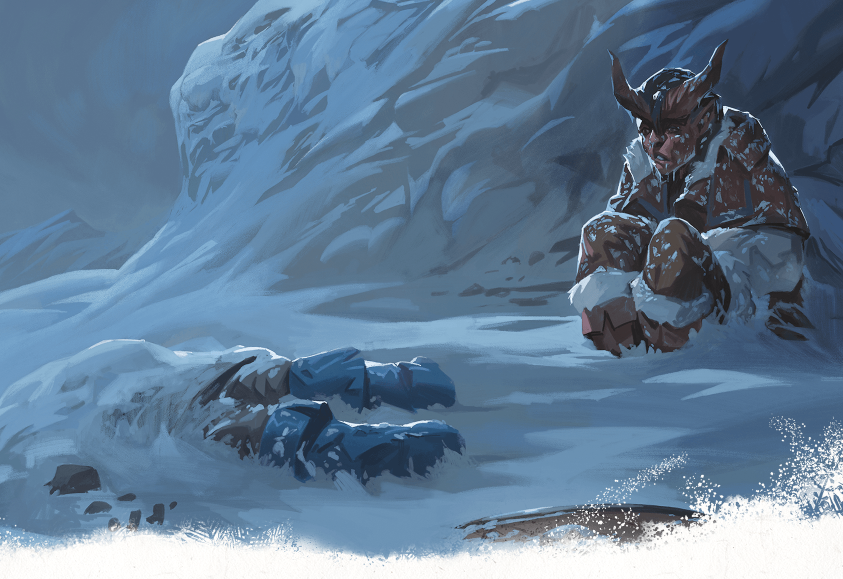
Your Story Begins in the Dark
Icewind Dale is a land frozen in stasis, where the gods are silent, the nights are endless, and desperation drives good people to dangerous places. Beneath the snow, something waits. Watches. Learns.
You arrive not as destined heroes, but as strangers, outsiders wandering into a place that does not want you, and may not let you leave.
Trust carefully.
Prepare wisely.
The Road to Icewind Dale
What Has Happened Before the Adventure Begins
For nearly two years, the far-northern region known as Icewind Dale has been trapped in an unnatural winter. The sun barely crests the horizon. The wind howls like a living thing. Lakes freeze solid to their depths. And above the mountains, shimmering in the endless night sky, the aurora spells the same truth over and over:
Auril the Frostmaiden has cursed the land.
No one knows why.
Some whisper that humanity offended her.
Others claim she is punishing Ten-Towns for greed, waste, or hubris.
A few insist that something far older than the Frostmaiden is stirring beneath the snow, and Auril’s winter is a desperate attempt to keep it contained.
But whatever the truth, the result is the same:
Trade has collapsed. Crops have failed. Wildlife has fled or turned savage. Towns teeter on the edge of starvation. Rumors of missing people and shape-shifting horrors spread like frostbite.
And Ten-Towns, never united even in the best of times, has begun tearing itself apart.
This is the world your characters enter.
The Spine of The World
Icewind Dale is the northernmost frontier of the Sword Coast, a wilderness so cold and remote that even the maps fade into blank parchment once they reach the Spine of the World mountains. It is a land defined not by kingdoms or borders, but by the struggle to survive. For centuries, the Dale has stood apart from southern politics. Too far, too harsh, and too wild for anyone to bother ruling. The few who call it home are trappers, traders, fisherfolk, goliath tribes, dwarven miners, wandering barbarians, and stubborn settlers who choose hardship over the comforts of civilized life. As the Drizzt Do’Urden novels often emphasize, Icewind Dale shapes its people through adversity; grit, independence, and resilience are the region’s truest currency.
Unlike the bustling, mercantile cities of the Sword Coast: Neverwinter, Waterdeep, and Baldur’s Gate. Icewind Dale is isolated by geography and climate. The Sea of Moving Ice is impassable most of the year, and the mountain passes are treacherous even in good weather. While the south thrives on trade, diplomacy, and culture, the Dale survives through fishing, hunting, and barter. Where Waterdeep debates taxes, Ten-Towners debate how to keep their families warm through one more night. Where Neverwinter rebuilds from political intrigue, the Dale rebuilds from blizzards, yeti raids, and the restless dead. Nothing about life here is easy, and even before Auril’s curse, winters were deadly, roads unreliable, and monsters commonplace.
Ten-Towns, the cluster of settlements by the lakes, is governed by a Council of Speakers, one representative per town. Though many assume they answer to the Lords’ Alliance, Ten-Towns has always been technically independent, a fact the Speakers fiercely defend. This independence has become a point of contention as the crisis deepens. With the endless winter choking trade and endangering thousands, the Lords’ Alliance has increased its presence, framed as essential aid and stabilization. Yet many believe Lord Dagult Neverember sees opportunity in the chaos and aims to pull the Dale into the Alliance’s sphere, if not outright occupation. Every supply caravan, every Alliance camp, and every “temporary garrison” fuels rumors that the south intends to make Icewind Dale a vassal.
These political tensions ripple outward to others who call the Dale home. The goliath tribes of the Spine of the World, steeped in tradition and seasonal migration, find their ancestral paths blocked by newly erected Alliance bases and refugee camps. Drow and duergar traders who have long moved through hidden tunnels and unregulated routes bristle at sudden tariffs, inspections, and restrictions imposed by Alliance agents intent on “bringing order” to frontier commerce. What the Alliance sees as security, others see as overreach. And in a land where autonomy has always been prized, many fear that southern interference may be as dangerous as the curse itself.
All of this sits atop a region already scarred by mythic history. The ruins of Netherese outposts linger beneath the ice. Reghed nomads whisper of ancient spirits buried in the tundra. The mountains hold old grudges from dwarven clans and giants alike.
In short, Icewind Dale is not simply “the north.” It is a world apart, harsher, older, and more primal than the Sword Coast. It is a place where civilization survives only because the people hold the darkness at bay, not because the darkness ever relents.
What You Should Know
Facts, Setting Knowledge, and Practical Information About Icewind Dale
Below is the common knowledge any character would reasonably have before (or shortly after) arriving in Icewind Dale. Use this information to shape your character’s background, goals, faction ties, and expectations.
1. Icewind Dale is in the Middle of an Endless Winter
- For almost two years, the sun has not fully risen.
- Every day is a twilight noon followed by 20+ hours of darkness.
- Temperatures are dangerously low, often –40° F with lethal wind chills.
- Blizzards are frequent, and whiteouts can disorient even seasoned locals.
- Travel is slow, dangerous, and often impossible during storms.
The people of the Dale blame Auril the Frostmaiden, a minor deity of winter who has become increasingly active.
2. Food, Trade, and Resources Are Critically Scarce
- Shipments from the south have stopped entirely due to sea ice.
- Overland caravans have dwindled or vanished.
- Game animals have migrated or become aggressive.
- Fishing (the region’s lifeblood) has become increasingly unreliable.
- Many towns face starvation, rationing, or internal conflict.
This scarcity affects:
- Morale,
- Politics,
- Prices,
- and Desperation.
3. Ten-Towns Is Not a Unified Region
Ten-Towns consists of ten independent settlements, each with its own:
- Leadership (known as Speakers),
- Economy,
- Culture,
- Priorities,
- and Local Disputes.
They cooperate when necessary but often compete, bicker, or sabotage each other.
Some towns are friendly; some are hostile; some are insular to the point of paranoia.
4. Rumors of Disappearances, Strange Creatures, and Paranoia Are Common
People talk about:
- Travelers vanishing,
- Ships or sled teams never returning,
- Strange shadows moving beneath the snow,
- Animals behaving violently,
- and People acting “different” after getting lost in storms.
Most rumors contradict each other.
Some feel superstitious, others feel unsettlingly consistent.
Characters would know that the Dale is dangerous, but not the cause.
5. Local Economy and Transportation
- Reindeer, axe-beaks, and dog sleds are primary transportation.
- Snowshoes are essential outside towns.
- Fishing is the main livelihood in many towns.
- Blacksmiths and craftsmen exist, but supplies are limited.
- Inns may have heat, but not always food.
Expect everything to cost more than it should.
6. The Factions Are Active in the Region
Though Ten-Towns is remote, all major Faerûnian factions have agents here:
Harpers
Help maintain peace and uncover magical mysteries.
Emerald Enclave
Investigate unnatural environmental disturbances.
Lords’ Alliance
Support stability and keep the towns from political collapse.
Order of the Gauntlet
Protect citizens from evil forces and cult activity.
Zhentarim
Control commerce, caravans, and black-market trade. Some helpful, some dangerous.
Any PC tied to these factions can reasonably have been:
- Assigned here,
- Sent to investigate,
- or Acting independently on faction goals.
7. Ten-Towns Relies on Outsiders
Adventurers are often:
- Hired as guards,
- Contracted for supply runs,
- Bribed for political leverage,
- or Blamed for whatever goes wrong.
Outsiders are common, but trust is rare.
Your party will likely be drawn into:
- Settling disputes,
- Solving disappearances,
- Hunting threats,
- and Dealing with factions.
8. Why Characters Might Arrive in Icewind Dale
Players should consider backstories that align with:
- Fleeing the south for safety or anonymity,
- Being sent by a faction,
- Searching for someone who went missing,
- Following rumors of ancient magic,
- Returning to a childhood home,
- Joining a caravan or supply mission,
- or Simply trying to survive in a place that pays for competent help.
Ten-Towns needs people who can do the dangerous jobs no one else can.
House Rules for This Campaign
This game uses the D&D 2024 rules revision. If you’re unfamiliar with the updates, please review:
- Summary of PHB 2024 changes:
https://www.dndbeyond.com/posts/1810-updates-in-the-players-handbook-2024 - Full handbook via the shared D&D Beyond campaign:
https://www.dndbeyond.com/campaigns/join/26113341266612668
These rules are baseline. Everything below describes what will apply in this campaign specifically.
Character Creation Rules
Starting Level
All characters begin at Level 1.
Ability Scores
Choose one of the following:
- Standard Array,
- Point Buy, or
- 4d6 drop lowest
Allowed Content
You may use:
- ANY race, class, subclass, background, or equipment from any officially published D&D source or adventure.
Customizing Ancestry
If you dislike your race’s ability score bonuses, you may rearrange them using:
- +2/+1, or
- +1/+1/+1
Background Feature Replacement
You may replace your Background’s Feature with a generic PHB feat.
Multiclassing
Multiclassing is fully allowed and requires no permission.
Caveat: If you multiclass poorly, dilute your spell progression, or hit “the drought,” you forfeit the right to complain or request special accommodations.
Alignment / Behavioral Choices
You may play an evil or complicated PC:
BUT if you betray, injure, or sabotage the party, the party may:
- kill your character, or
- kick them out, and this is considered fully valid.
Starting Magic Item
Every player begins with a unique magic item (assigned individually).
General Gameplay House Rules
Consumable Use
Potions, scrolls, gems, and other consumable magic items require a Bonus Action.
Item Interactions
Each turn:
- 1 free environmental or inventory interaction,
- Additional interactions cost a Bonus Action.
Encumbrance
Encumbrance is tracked numerically.
Major Rules Changes Specific to This Campaign
1. Resting & Safe Havens
Exhaustion, Ability Score reduction, and Lingering Injuries do NOT heal unless you take a long rest at a Safe Haven or take the Recuperate downtime action.
A Safe Haven is:
- an inn,
- a secured building,
- or a shelter with warmth, food, and no reasonable danger.
A camp in the tundra or a ship on rough waters is NOT a Safe Haven.
(This ties directly into the survival-horror theme.)
2. Helping Others
If you are not proficient in a skill or tool, you cannot provide the Help action for that task.
3. Corpse Tanking
If you are at 0 HP and are healed above 0 HP, you suffer Corpse Tanking until the end of your next turn:
- Speed halved
- –2 AC
- –2 DEX saves
- Cannot take reactions
- On your turn you may take only an Action or a Bonus Action
This simulates the shock of being revived in freezing, traumatic conditions.
4. Lingering Injuries
You gain a Lingering Injury (treated as 1 level of exhaustion) if you:
- Fail a death save by 5 or more
- Drop to 0 HP for the third time in one adventuring day
This keeps the stakes high in a horror environment.
Boss monsters can inflict actual “injuries” like a broken arm, etc., on powerful crits.
Spells That May Disrupt the Flavor of the Adventure
This campaign is built on the themes of harsh wilderness, resource scarcity, dangerous travel, and psychological survival horror. Some spells, while completely legal and allowed, have the potential to bypass core elements of the Icewind Dale experience.
These spells can be taken, but you should be aware:
I reserve the right to apply Rule 0 and interrupt, modify, or limit their function if they invalidate the intended gameplay experience.
This will always be done with narrative logic, immersion, and fairness in mind.
These rulings primarily apply to low-level spells (Cantrip & 1st–2nd level), because these spells can otherwise negate entire systems of travel, hunger, or shelter at almost no cost.
Spells of 3rd/4th level or higher are far less likely to be interfered with,
because casting them is a meaningful resource expenditure and feels like an appropriate trade-off in a survival-focused campaign.
For example:
- Leomund’s Tiny Hut may get buried in snow, collapse, or become dangerously cold as temperatures plummet.
- Goodberry may not be enough to satisfy a full day of nutrition during long periods of physically intensive foot travel.
- Create Food and Water may produce frozen bricks that are difficult to eat and require preparation with the cooking downtime action.
The goal is not to punish you. It is simply to protect the mood and challenge of the adventure.
Survival-Breaking Spells Likely to Be Impacted
1. Shelter & Safe Rest Bypassing
- Leomund’s Tiny Hut
- Rope Trick
These may be affected by:
- extreme weather
- thin ice
- shifting terrain
2. Food, Water, and Nutrition Skip
- Goodberry
- Create Food and Water
These may be impacted by:
- increased caloric needs in sub-zero temperatures
- spoilage or freezing
- creatures drawn to the smell or magic
3. Resurrection / Risk Bypass
- Revivify
- Raise Dead
Not banned, but death in a survival-horror game should feel real.
These spells may:
- fail without a Safe Haven,
- have altered costs or consequences due to the frozen land’s magic.
Why This Exists
These limitations are NOT designed to punish creative spellcasters.
They exist because:
This is a survival horror campaign.
Magic cannot solve every problem.
The cold, the darkness, and the unknown must remain a threat.
Spells that short-circuit:
- hunger
- exposure
- exhaustion
- travel difficulty
- resource management
- danger at night
…directly remove the tension and tone that make this adventure special.
So if you take one of these spells, please do so knowing it may behave differently in Icewind Dale, and that those differences exist to preserve the experience we all signed up for.
New Mechanics
This campaign uses a set of expanded and modified mechanics designed to reinforce the themes of harsh wilderness survival, resource scarcity, and meaningful travel. These rules are intended to add tension and immersion—not complexity for its own sake.
Encumbrance
Encumbrance is in use for this campaign.
If you exceed your carrying capacity:
- Your speed is reduced by half, and
- Traveling long distances while overloaded can cause Exhaustion.
Because of this, players are encouraged to manage weight using:
- dog sleds
- axe-beak mounts
- wagons
- pack animals
- tavern rooms or storage spaces in Safe Havens
Loot, supplies, and harvested materials are heavy. Plan accordingly.
Harvesting (Hamund’s Harvesting Handbook Rules)
Characters may attempt to harvest materials from defeated creatures for use in crafting items, potions, reagents, and magical gear.
Harvesting Check
To harvest a creature:
DC = 8 + Creature CR
Skill Used by Creature Type
| Creature Type | Skill |
|---|---|
| Aberration | Arcana |
| Beast | Nature |
| Celestial | Arcana |
| Construct | Investigation |
| Dragon | Nature |
| Elemental | Arcana |
| Fey | Arcana |
| Fiend | Arcana |
| Giant | Medicine |
| Humanoid | Medicine |
| Monstrosity | Nature |
| Ooze | Investigation |
| Plant | Nature |
| Undead | Arcana |
Success yields harvestable components used as base materials for crafting.
Crafting (Using Harvested Materials)
Crafting requires three components:
1. Base Component
Harvested from a creature; provides the magical or alchemical essence of the item.
Some items allow multiple possible harvesting ingredients.
2. Crafting Cost
Covers mundane materials, tools, reagents, and workspace requirements.
(This cost does not include hiring a professional crafter.)
If the players provide the base component, its value is deducted from the total cost.
3. Time
Crafting takes a specified number of days depending on the item.
In a Safe Haven, receiving help from a professional cuts crafting time in half.
Crafting may occur:
- slowly during Travel Downtime, or
- efficiently in Safe Havens.
Travel Downtime Actions
During overland travel, each character receives:
➡️ 1 Daytime Activity
➡️ 1 Night-time Activity
These actions represent the work of surviving, maintaining gear, tending wounds, and preparing for the next day in the tundra.
Available Travel Downtime Actions
- Crafting — Crafting mundane items, consumables, and making use of harvested monster materials.
- Learning — Study a tool, language, text, or technique.
- Recuperating — Heal exhaustion, lingering injuries, and strain.
- Training — Practice martial stances, spell control, or discipline. (Used to switch fighting styles, scribe new spells in your spellbook, swap cantrips, and multiclass).
- Keep Watch — Scan for hazards; reduce surprise; spot threats early.
- Forage — Search for food, reagents, herbs, or useful materials.
- Cooking — Prepare meals. (Eating well-prepared & warm meals provides 1d6+Wis mod temp HP and gives advantage towards curing disease).
- Make Camp — Build windbreaks, reinforce shelter, manage warmth, etc.
Activity Limits
Some tasks are restricted to only allowing a certain number of players to take the action per day/night cycle, making the choice of what to do truly exciting.
Safe Haven Downtime (Full Downtime Options)
Safe Havens (inns, lodges, fortified shelters, faction bases) allow characters to take full Xanathar’s Downtime Activities, including:
- Crafting a Magic Item
- Carousing
- Crime
- Gambling
- Pit Fighting
- Relaxation
- Religious Service
- Research
- Training
- Work
- Scribing Spells
- Buying/Selling Magic Items
- Recovering from Injuries
Safe Havens provide:
- Warmth
- Safety
- Tools
- Time
- Access to professionals
- Reliable long rests
Safe Havens are critical anchors in a harsh, resource-starved world.
Travel Interactions & Random Encounters
Journeying through Icewind Dale is not abstract. It is a hex crawl, where every 6-mile hex represents real distance, real danger, and real time spent exposed to the elements.
Each hex is resolved individually, with its own events, hazards, and opportunities.
Hex Size & Travel Rates
Each hex on the map represents:
➡️ 6 miles of difficult arctic terrain.
Your party chooses a travel pace each day:
• Slow Pace — 3 hexes/day
Better awareness, reduced exhaustion risk, and easier downtime actions.
• Normal Pace — 4 hexes/day
The standard speed of travel.
• Fast Pace — 6 hexes/day
Covers more ground, but increases exhaustion risk and makes downtime actions harder.
Travel Pace Effects
Your travel pace influences:
1. Difficulty of Downtime Activities
- Slow Pace → Lower DCs, more stable working conditions
- Normal Pace → Standard DCs
- Fast Pace → Higher DCs; skill checks may be at disadvantage
2. Exhaustion Risk
- Slow Pace → Reduced risk
- Normal Pace → Standard risk
- Fast Pace → High risk, especially in storms, whiteouts, or deep snow
3. Ambush & Detection
- Slow Pace → Better chance to spot threats
- Fast Pace → Vulnerable to surprise encounters
Travel pace is a meaningful decision. It affects safety, productivity, and survival.
Mounts & Vehicles
Mounts and vehicles are essential for surviving the Dale.
Mount Types
- Axe-Beaks
- Giant Goats
- Reindeer
- Dogs & Sled Dogs
- Dog Sleds
Each provides the following benefits:
• Increased Travel Pace
Mounts allow the party to exceed their normal travel rate and sometimes add +1–5 hexes/day depending on weather conditions.
• Reduced Impact of Difficult Terrain
Snow, loose ice, drifts, and tundra are easier to traverse.
Dog sleds are especially effective on packed snow or frozen lakes.
• Lower Exhaustion Risk
Because the weight burden is shifted off the characters.
• Higher Carrying Capacity
Essential for strict encumbrance rules.
Per-Hex Encounter Resolution
Every hex traveled triggers a Travel Interaction, resolved using my custom encounter tables and improvisational system. These results may include:
Environmental Hazards
Monsters & Wildlife
NPC Interactions
Plot Intrigue
Landmarks
Or Anything I Makes Up On the Spot
Daily Rhythm of Travel
A typical day of travel includes:
1. Choosing pace (Slow, Normal, Fast)
Determines hexes covered and difficulty modifiers.
2. Select Travel Downtime (Day)
Using the Travel Downtime actions shown in your chart.
3. Resolving hex-by-hex encounters
Each hex: new event, threat, hazard, or opportunity.
4. Making Camp & Selecting Downtime (Night)
Determining safety, heat, and exposure before resting.
Travel is a full subsystem, tense, atmospheric, and unpredictable. Every decision matters.
These mechanics reinforce the survival-horror tone of Icewind Dale.
Your choices, what to carry, what to craft, how to spend downtime, and how you travel, will shape the story and determine who survives the cold.
Conclusion
This guide has given you the tools, rules, and context you need to create characters who belong in this frozen frontier. You now understand the politics of Ten-Towns, the tension between factions, the reality of travel through an endless winter, and the systems we’ll use to evoke survival horror: harvesting, crafting, downtime, encumbrance, and exploration. These mechanics aren’t obstacles; they’re opportunities to immerse yourself in a story where your decisions matter, and the world reacts to them.
Remember:
This is not a game about perfection.
It’s a game about endurance.
About firelight in the darkness.
About holding on to hope when the night seems endless.
About discovering who your character becomes when the world around them is falling into shadow.
And through all of it, your party is your greatest resource.
Cooperate, communicate, and rely on each other, because no one survives Icewind Dale alone.
So pack your furs. Sharpen your blades. Mark your maps.
Ahead lies a land swallowed by winter, stalked by old secrets and silent threats, waiting for a handful of brave fools willing to step into the storm.
Welcome to Icewind Dale.
Your story begins in the dark.